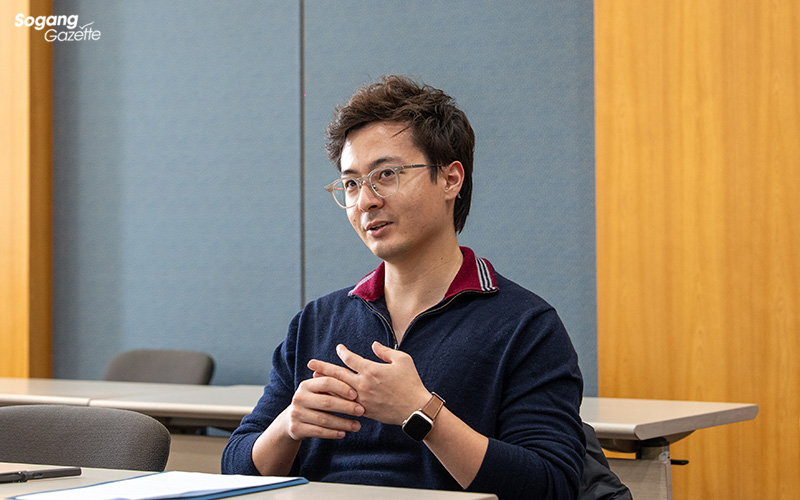
윌리엄 길버트 · 서강대학교 철학과
PhD Student, Department of Philosophy · Sogang University
I’m a philosopher based in Incheon, South Korea, working toward a PhD at Sogang University. I work on Korean Daoism, how Neo-Daoist ideas arrived on the peninsula, and how they became something original in the hands of Goryeo thinkers.
自然 - the way things generate themselves
My work sits at the intersection of Korean Daoism, Neo-Confucianism, Buddhism, and folk religion - traditions Korean thinkers rarely kept in separate boxes, and I don't either. My dissertation, on Korean Neo-Daoism in the Goryeo period, anchors that range: the full argument lives in Research below.
Beyond the dissertation, I've published or have work under review on Goguryeo tomb murals, mountain spirit worship, Confucian ritual music, and, further afield, the computer game Fallout. What ties it together isn't a single subject but a habit: taking materials often dismissed as ornament or syncretism seriously as philosophy.
Following this work has taken me from Seoul to Rome, Hong Kong, Taipei, and Budapest, and into broader questions about how philosophical traditions don’t just travel, they transform. Alongside my dissertation, I serve as an editorial assistant on forthcoming Oxford and Routledge volumes on Korean philosophy.
Areas of specialization
Korean Philosophy · Daoism · Comparative Philosophy
Areas of competence
Confucian Ethics · Silhak (Practical Learning) · Premodern Korean Religion and Intellectual History
The architecture of my scholarly project, from the dissertation outward.
Dissertation · in progress
Sogang University · Supervisor: Prof. Halla Kim · expected 2027
Argues that Goryeo Korea (918–1392) developed a philosophically distinctive mode of Neo-Daoist thought - centered on non-teleological self-generation (ziran 自然), literary spontaneity, and an affective negotiation with cosmic indifference - building on the Wei-Jin foundations of Wang Bi and Guo Xiang. The argument moves through the self-styled Seven Worthies of the Eastern Land, whose collective withdrawal from court life enacted these values as a lived form of life; Yi Gyubo’s (1168–1241) cosmology of spontaneous self-generation and his literary theory of “new intention” (sinui 新意); and his debate with Yi Inro over citation and originality in poetic composition. Its central original contribution is affective Neo-Daoism: the concept naming Yi Gyubo’s decades-long practice of addressing, blaming, and diminishing a “little Creator” his own cosmology has already dissolved - read as what a non-teleological metaphysics costs a mortal, suffering body to actually live by.
Chapter roadmap
1. Xuanxue in Transit - reception and conditions in Goryeo
2. The Seven Worthies of the Eastern Land - Neo-Daoism as lived practice
3. Yi Gyubo’s Cosmology - spontaneous self-generation and the rejection of teleology
4. Ziran and Literary Creativity - the Yi Gyubo–Yi Inro debate
5. Affective Neo-Daoism - the “Little Creator” in Yi Gyubo
6. Toward a Theory of Korean Neo-Daoism
Related research threads
“Religious Syncretism between Daoist and Shamanistic Imagery in Goguryeo Tomb Murals”
The Review of Korean Studies
“Ordering Emotion through Sound: Ritual Music and Heart-Mind Cultivation in Korean Neo-Confucianism”
European Journal of Korean Studies
Daoist elements of Korean Mountain Spirit worship
Rethinking the bird atop Baekje’s incense burner
Confucian approaches to care and public health
Fallout and aesthetic retrofuturism
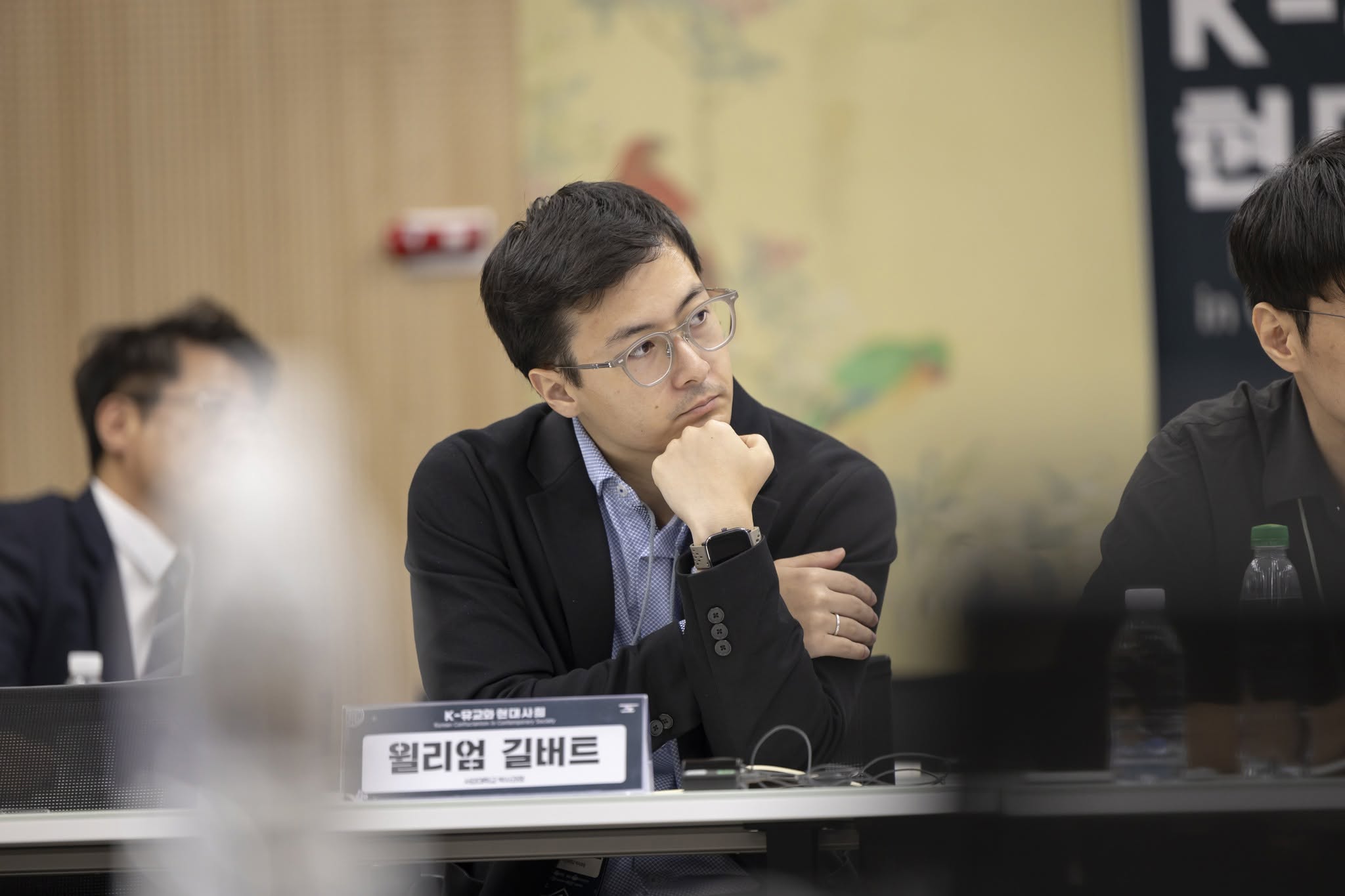
Selected papers and presentations from the last year. The full record is on my CV.
Interviewed for the Sogang Gazette, 2025
Confucian Culture Expo, Nonsan-si, 2024
“A Chance Encounter, A Lasting Connection” ↗
Templestay: Magazine of Korean Traditional Culture, vol. 59: 58–65
“Ordering Emotion through Sound: Ritual Music and Heart-Mind Cultivation in Korean Neo-Confucianism”
European Journal of Korean Studies 26.1
“Religious Syncretism between Daoist and Shamanistic Imagery in Goguryeo Tomb Murals”
The Review of Korean Studies 29, no. 1: 237–258 · PhilArchive ↗
“Between Traditions: Korean Philosophy and the Limits of Universality” ↗
Reports from Abroad, Blog of the American Philosophical Association
“Toward Korean Neo-Daoism: Daoist Philosophy in the Writings of Yi Gyubo”
NAKPA Panel, APA Pacific Division Meeting
Korean philosophy for audiences beyond the seminar room.
Press · Summer 2026
A Chance Encounter, A Lasting Connection
Featured with Edward in Templestay: Magazine of Korean Traditional Culture (Cultural Corps of Korean Buddhism) on our templestay at Jeondeungsa Temple, Ganghwado - vol. 59: 58–65.
Podcast · 2024
Taoism and the Creator
Korea Deconstructed ep. 77, with David Tizzard - a long conversation on Korean Daoism and Yi Gyubo’s cantankerous Creator.
Watch on YouTube ↗
Interview · 2026
Between Traditions
On Korean philosophy and the limits of universality, for the APA Blog’s Reports from Abroad series.
Read the interview ↗
Public writing · 2025
Rediscovering a Neglected Tradition
A review of Korean Philosophy: Sources and Interpretations for the Blog of the APA, with André M. Penna-Firme.
Read the review ↗
Online courses · 2021–2023
Five courses on Korean philosophy
Co-produced with the Center for K-Academic Expansion in Philosophy, including Introduction to Korean Philosophy and Culture and the Korean Philosophy Essentials specialization on Coursera, plus courses on Korean music, Buddhist philosophy, and aesthetics.
Community · 2024–present
r/KoreanPhilosophy
Founder and moderator of the subreddit for Korean philosophy - a growing home for readers, students, and the simply curious.
Press · 2025
Sogang Story No. 115
Profiled by the Sogang Gazette, Sogang University’s newspaper, on studying Korean philosophy as an international researcher.
A short list of readings I have found useful for getting oriented in Korean philosophy - not exhaustive, just a place to start.
Comprehensive overviews
Sourcebook of Korean Civilization, 1993 - ed. Peter Lee
Korea: A Religious History, 2002 - James Grayson
Korean Philosophy: Sources and Interpretations, 2015 - ed. Youn Sa-soon
Religious and Philosophical Traditions of Korea, 2019 - Kevin Cawley
Stanford Encyclopedia: Korean Philosophy - Halla Kim
Korean Confucianism
The Rise of Neo-Confucianism in Korea, 1987 - Wm. Theodore de Bary & JaHyun Kim Haboush
To Become a Sage: The Ten Diagrams on Sage Learning, 1988 - Michael Kalton
Stanford Encyclopedia: Korean Confucianism - Kevin Cawley
Korean Buddhism
The Formation of Ch’an Ideology in China and Korea, 1989 - Robert E. Buswell
Makers of Modern Korean Buddhism, 2010 - Jin Y. Park
Stanford Encyclopedia: Korean Buddhism - Lucy Hyekyung Jee
Korean Daoism
“Daoism in Korea”, in Daoism Handbook, 2000 - Jung Jae-Seo
“Taoism in Korea”, in The Encyclopedia of Taoism, 2004 - Fabrizio Pregadio
Taoism in Korea: Past and Present, 2010 - Donald Baker
“Toegye’s Appraisal of Daoism”, 2020 - Vladimir Glomb
Korean Shamanism
“Concerning the Origin and Formation of Korean Shamanism”, 1973 - Jung Young Lee
Korean Shamanism: The Cultural Paradox, 2003 - Chongho Kim
“The Concept of ‘Korean Religion’ and Religious Studies in Korea”, 2010 - Chongsuh Kim
Primary texts & databases
Charles Muller: The Collected Works of Korean Buddhism
Charles Muller: Buddhist, Confucian & Daoist E-texts, Indexes & Bibliographies
한국고전종합DB (Korean Classics Database)
Online courses - Center for K-Academic Expansion in Philosophy